
A Heritage Ledger · Volume of Six Chapters
Classic Formal Trousersan enduring grammar of men’s dress
Long before slim fits and stretch cloths, tailors had already settled the essentials of a good trouser: a waist that sits true, a crease that runs straight and a leg that falls cleanly to the shoe. Those principles remain the backbone of every professional wardrobe.
Traditional tailoring
Traditional tailoring treats the trouser as a structured garment rather than a simple covering for the legs. Each pair begins with a pattern drafted to a set of proportions — waist, seat, rise, thigh, knee and hem — and is cut so that the grain of the cloth runs straight down the centre of each leg.
That straight grain is the secret of the classic look. It allows the front crease to fall vertically from waistband to hem, so the trouser hangs cleanly when standing and recovers its line after sitting. Traditional construction adds supporting details: a firm waistband, a properly lined fly, pockets that lie flat and a hem finished with enough weight to keep the leg steady.
The results are quiet but unmistakable. A classic formal trouser looks composed even in motion — and composure is precisely what professional dress is meant to convey.
The evolution of men’s trousers
The formal trouser we wear today is the product of roughly two centuries of gradual refinement. The broad strokes:
- Early 1800s
From breeches to trousers
Full-length trousers gradually replace knee breeches in fashionable European menswear, becoming standard daywear as the century progresses.
- Late 1800s
The pressed crease
The front crease becomes fashionable — commonly attributed to the influence of the British court — and quickly signals a well-kept trouser.
- Early 1900s
Turn-ups and belt loops
Turn-ups (cuffs) become popular on daywear, and belt loops spread as belts begin to rival braces.
- 1930s
Higher rises, fuller legs
Pleated, high-waisted trousers with generous legs define the elegant tailoring of the era; zip flies gradually replace buttons.
- Mid-century
The streamlined line
Leaner, flat-front trousers gain ground, reflecting a more streamlined post-war aesthetic.
- Today
Choice and proportion
Classic, straight, slim and tapered cuts coexist; the modern wardrobe chooses by occasion and body rather than by rule.
Pleated & flat-front trousers
Pleats are folds of cloth stitched at the waistband that open as you sit or move, releasing room through the hip and thigh. They are the most traditional of trouser details and remain the hallmark of a classic, generous cut.
The pleated trouser
Forward pleats (opening towards the fly) and reverse pleats (opening towards the pockets) both add comfort and drape. Pleats work best with a mid to high rise and a straight or classic leg, where the extra cloth has space to fall gracefully. They suit fuller builds and men who sit for long periods.
The flat-front trouser
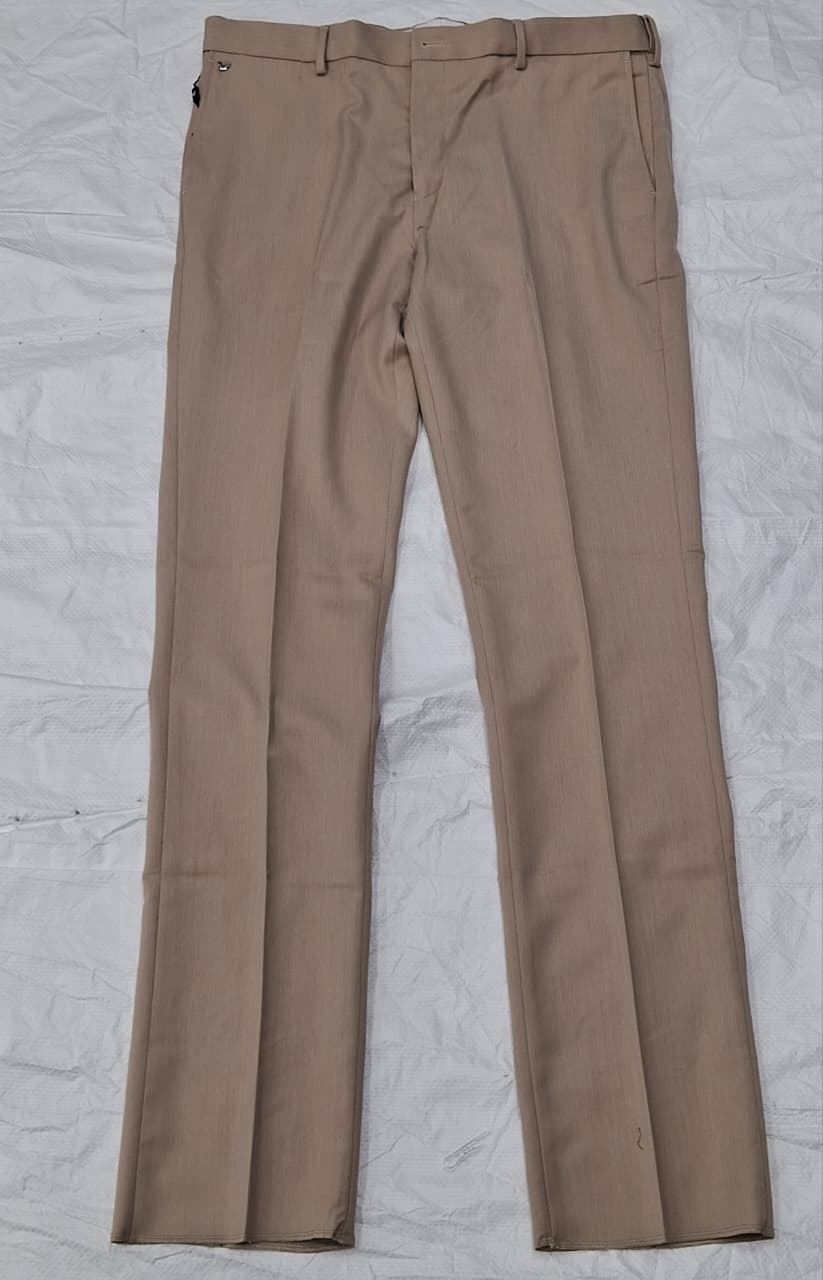
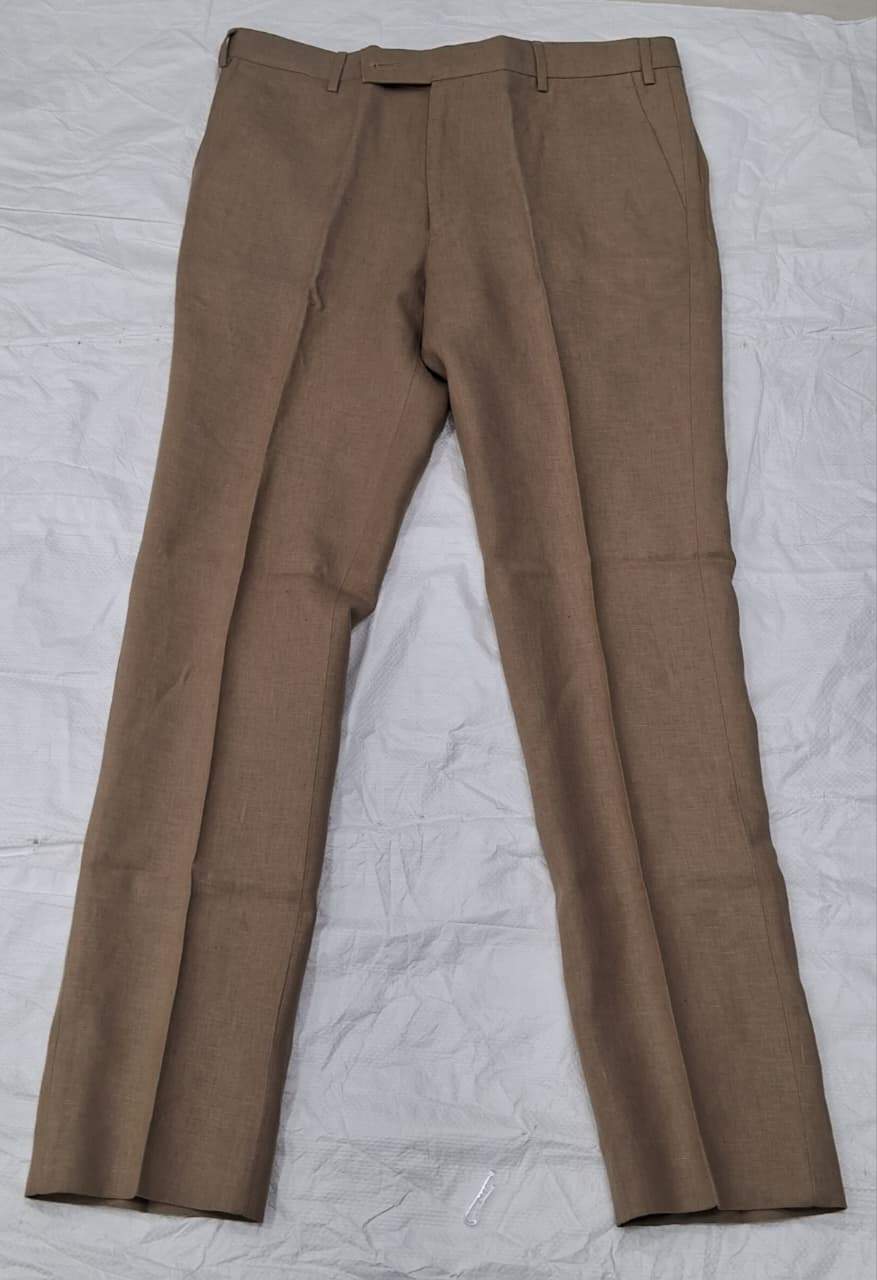
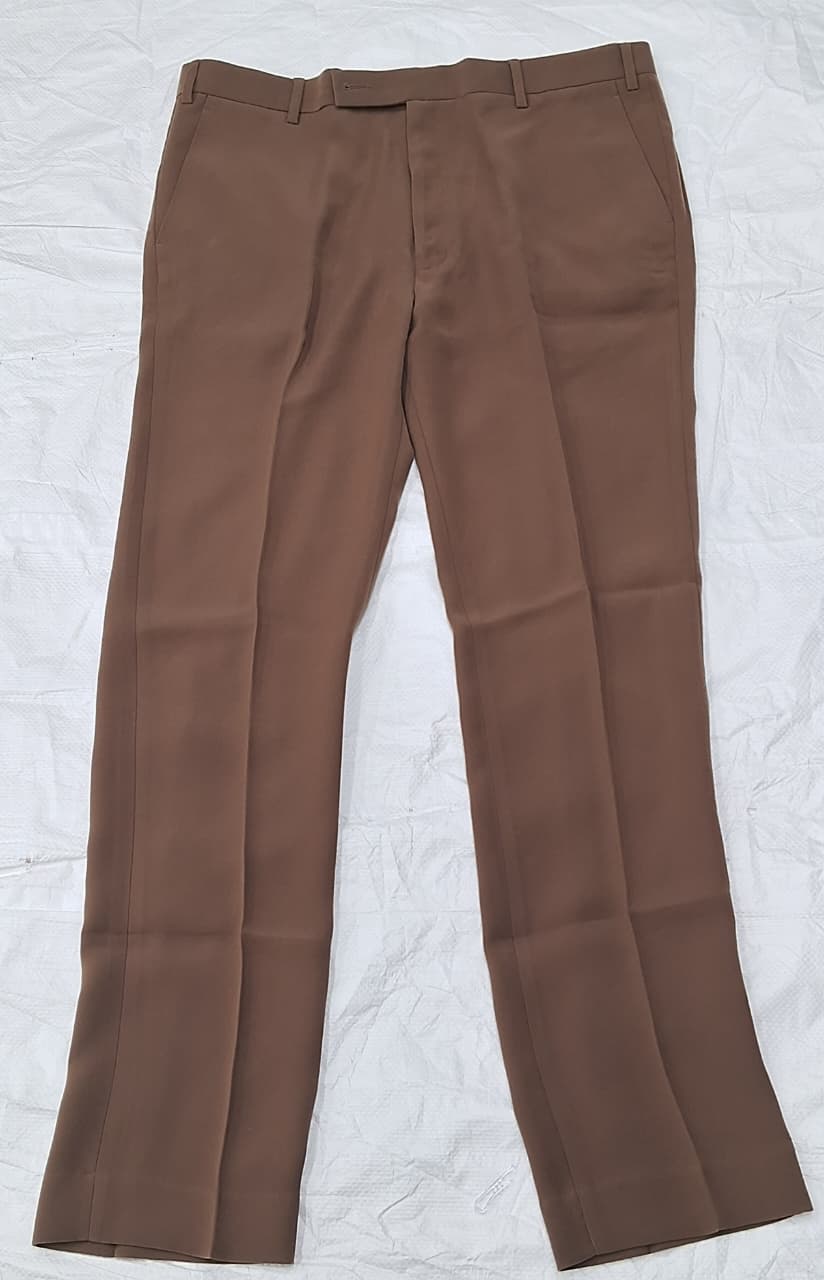
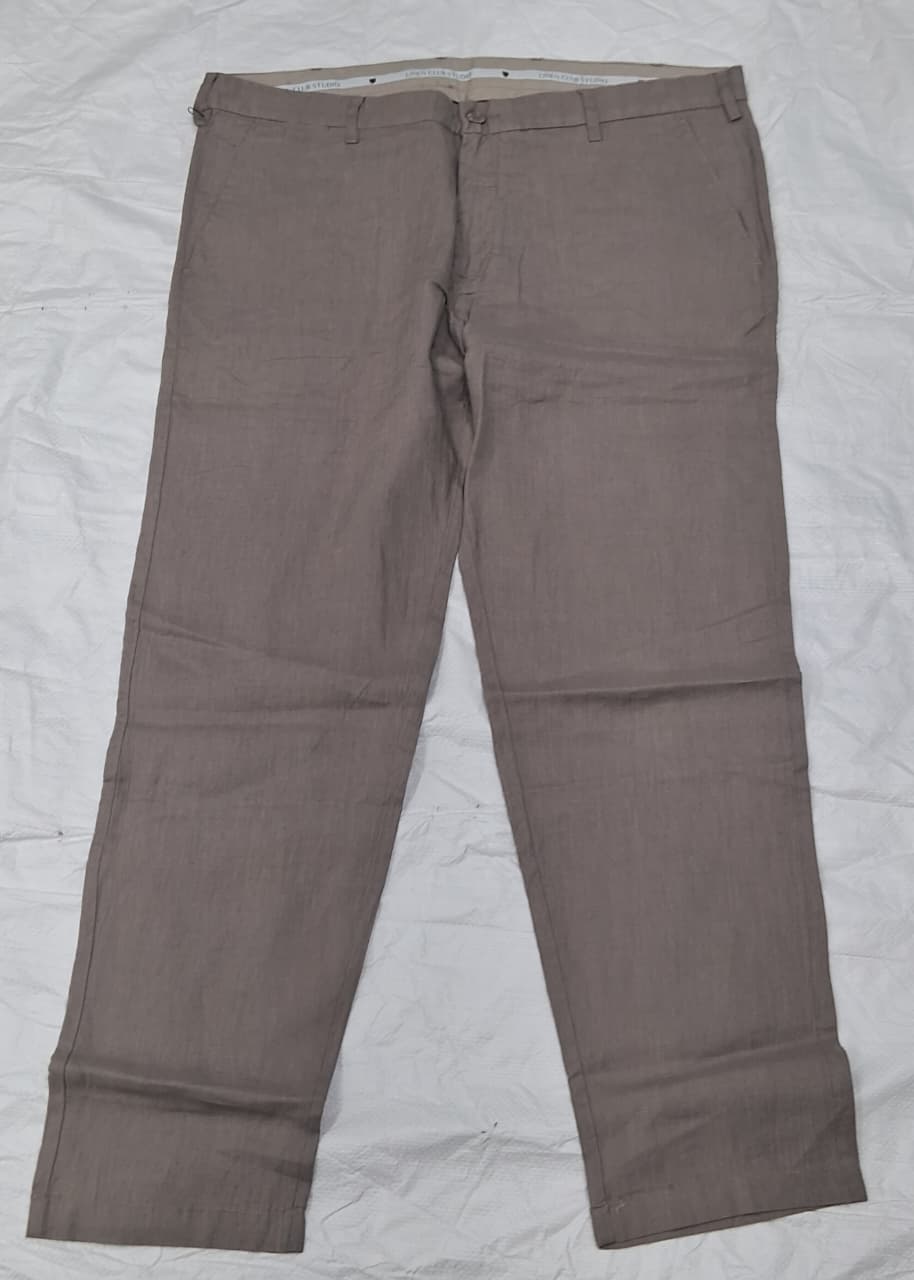
A flat front removes the pleats for a cleaner, slimmer line through the hips. It has become the default for many office trousers and pairs naturally with slim, straight and tapered fits. Most of the trousers photographed on this site are flat-front.
Which to choose?
If you value comfort and traditional elegance, consider pleats. If you prefer a lean, contemporary outline, choose a flat front. Either way, the front should lie smooth when standing — pleats that pull open are a sign of a waist or seat that is too tight.
Classic straight silhouettes
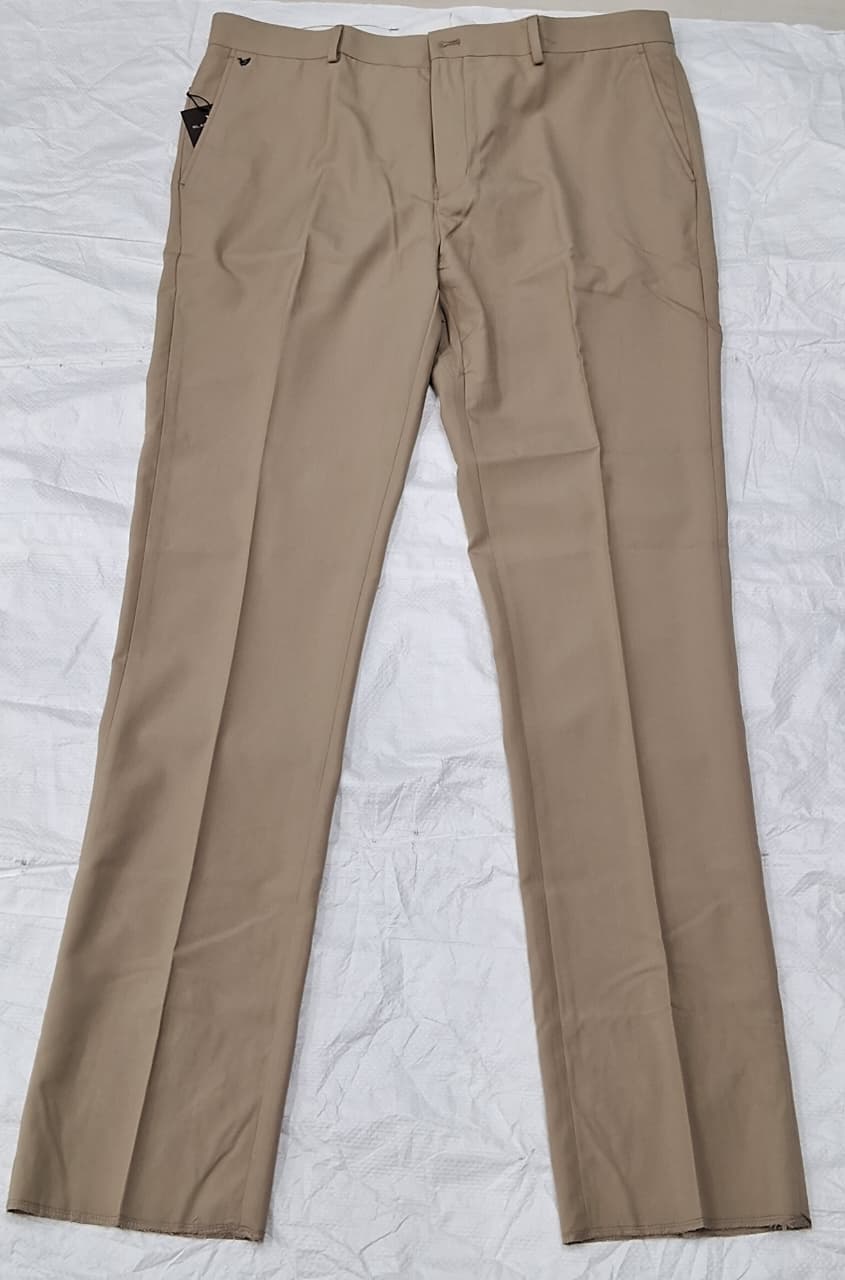
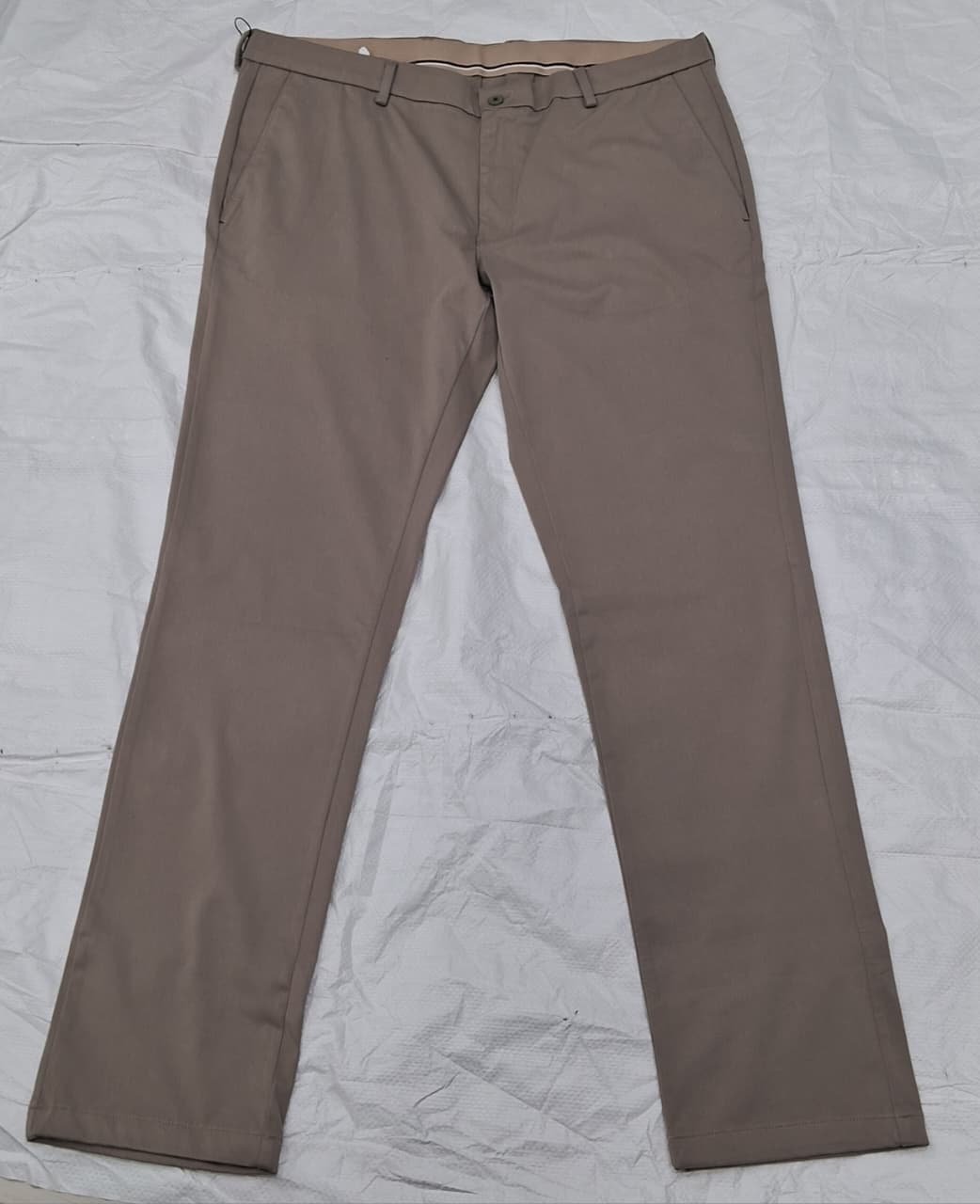
The straight leg is the classic silhouette par excellence. Cut with an even width from knee to hem, it forms a single column from waist to shoe — the visual equivalent of good posture.
A classic straight trouser typically has a mid to natural rise, moderate room through the thigh and a leg opening wide enough to sit comfortably over a formal shoe. Its proportions balance the structured shoulders of a tailored jacket, which is why it has remained the default cut for suiting for generations.
Finish the straight leg with a slight or half break. Too little length and it looks borrowed; too much and the column collapses into folds at the ankle.
Traditional waistband construction
In classic tailoring the waistband is a structural element. It is typically interfaced to stay firm, so it does not roll or collapse as you sit, and is shaped to follow the natural line of the waist.
- Extended tab closures — a waistband extension fastened with a button or hook, giving a clean front and a secure hold.
- Belt loops — evenly spaced to keep a belt level; the classic arrangement places loops either side of the front and at the back.
- Side adjusters — buckles or tabs at the hips that allow the trouser to be worn without a belt, a refined option for formal occasions.
- Brace buttons — inside the waistband on very traditional trousers, for wearing with braces.
Whatever the closure, a classic waistband should sit level all the way around, without dipping at the back or digging in at the front.
Formal styling & timeless combinations
Classic trousers are styled by a few durable rules: keep the shirt lighter than the trouser, keep the belt in the same family as the shoes, and let the jacket either match or clearly contrast the trouser — never almost match.
These combinations have served professional men for decades and remain reliably correct today.
| Trouser | Shirt | Jacket | Shoes & belt |
|---|---|---|---|
| Charcoal | White or pale blue | Navy or matching charcoal | Black Oxfords, black belt |
| Mid grey | White, pale pink, light blue | Navy blazer | Dark brown or burgundy |
| Navy | White, sky blue, lavender | Grey or matching navy | Black or dark brown |
| Tan & beige | White, light blue, cream | Navy or brown | Brown suede or leather |
| Brown & taupe | Cream, ecru, sky blue | Navy, olive or camel | Dark brown, tan |
Why the classics endure
A classic trouser is never out of date — only out of fit.
Classic formal trousers remain essential because they are understood everywhere: in boardrooms, at ceremonies and in interviews. They signal seriousness without effort, and they adapt to every jacket and shirt in a professional wardrobe.